We do not always notice the art on our walls. That is precisely the point. Unlike music or a film, which demand active engagement, visual art works in the background — registering in the peripheral field, absorbed during quiet moments of pause, glimpsed while walking between rooms. Because of this, the images we choose to live with have an outsized, often unacknowledged effect on how we feel at home.
At Shine Design Blossom, we think about this constantly. Our work is not purely decorative. We design pieces that are meant to slow the eye, soften the breath, and give the mind somewhere restful to land. In this article, we want to share what we have learned — from research, from experience, and from the thousands of conversations we have had with customers about what art does in their homes.
What the Research Says
The relationship between visual environment and mental health is well-documented. Studies in environmental psychology consistently show that exposure to certain kinds of images — natural scenes, organic forms, patterns with fractal-like complexity — reduces self-reported stress and lowers physiological markers of anxiety such as heart rate and cortisol levels.
Researcher Roger Ulrich's landmark 1984 study showed that hospital patients with window views of trees recovered faster and requested less pain medication than those facing a brick wall. While most of us are not in hospital recovery, the principle extends to everyday life: what we see shapes how we feel, and how we feel shapes our capacity to think, rest, and connect with others.
"Environments that contain natural elements — curves, organic patterns, soft textures — engage the brain's attention system in a way that restores, rather than depletes, mental resources." — Environmental Psychology Research
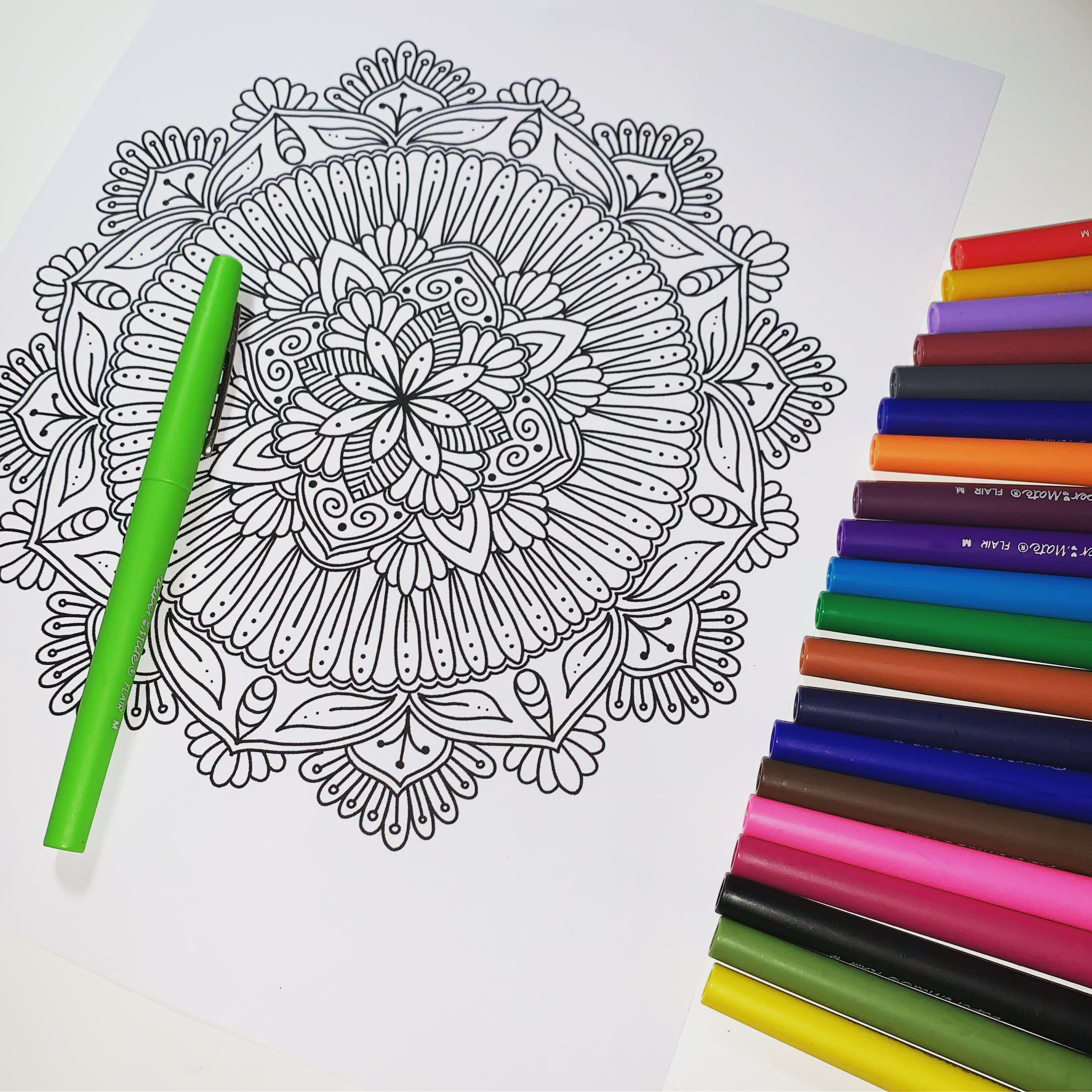
Fractal patterns — self-similar shapes that repeat at different scales, as found in coastlines, ferns, snowflakes, and mandalas — have been shown to reduce stress by up to 60% in some studies. The human visual system appears to have evolved a preference for this kind of structured complexity: engaging enough to hold attention, yet orderly enough not to overwhelm.
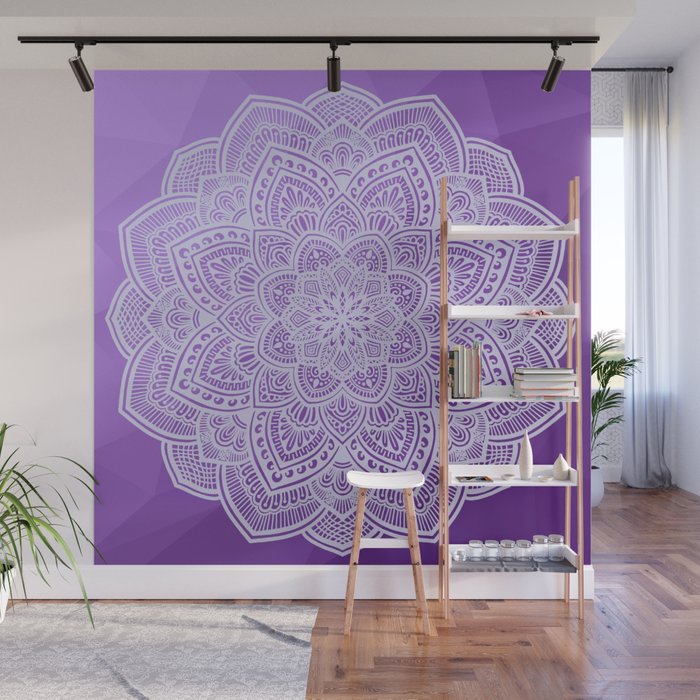
A single large mandala on a wall becomes a visual anchor — the eye returns to it, and each time, finds rest.
The Psychology of Colour in Art
Colour is the most immediate emotional trigger in visual art. Before the eye has resolved a shape or read a composition, it has already responded to colour — and that response is both universal and deeply personal.
Some associations are consistent across cultures. Cool blues and blue-greens — the palette of water, sky, and deep forest — are reliably associated with calm, trust, and mental clarity. This is part of why our water-teal palette anchors so much of our work. It creates a visual temperature that signals: slow down, breathe, you are safe here.
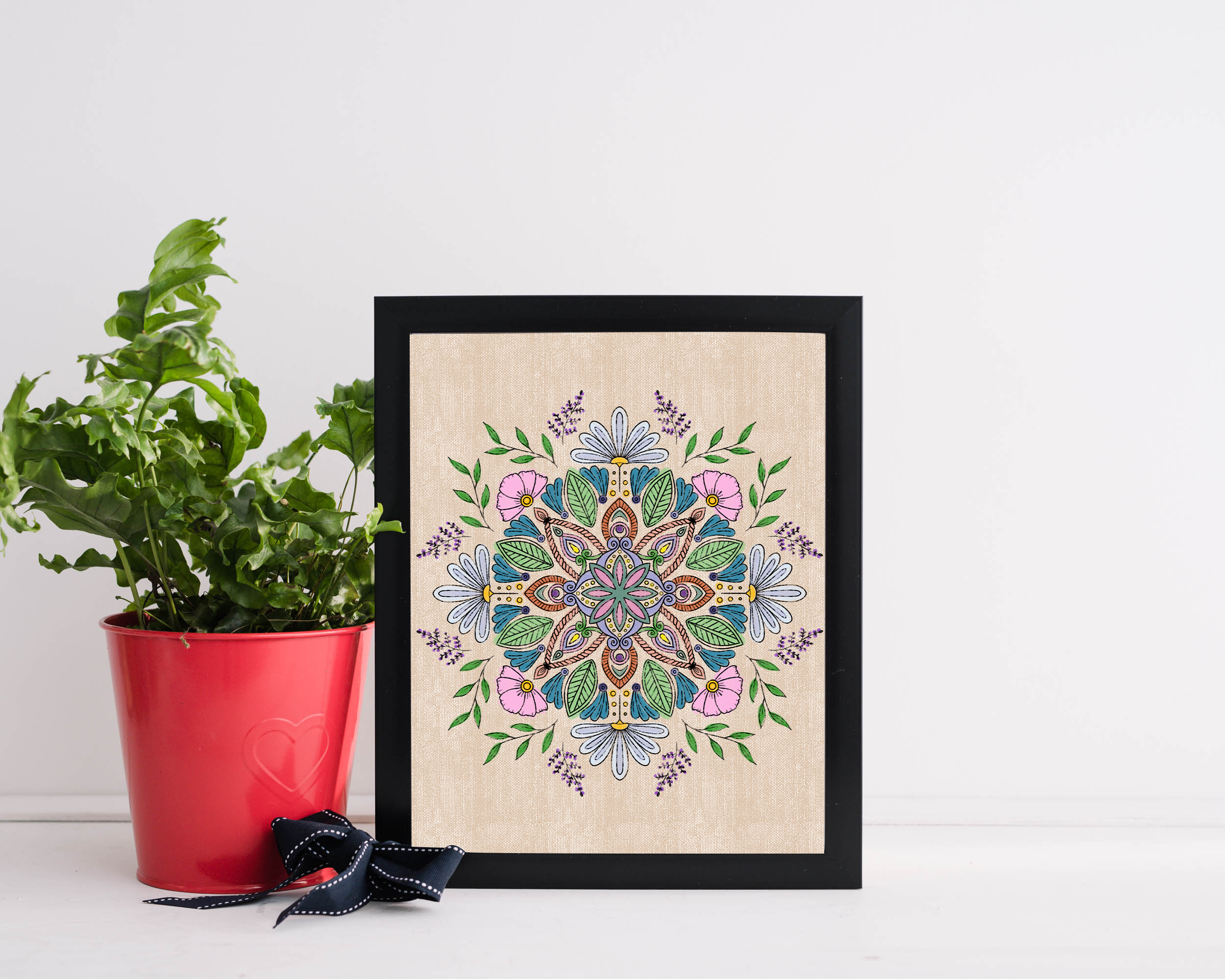
Warm neutrals — cream, sand, warm grey — function as visual silence. They give the eye nothing to react to, which is itself calming. When we frame our mandala prints on a warm cream background, that surrounding space is doing active work: it is telling the nervous system to settle before engaging with the pattern at the centre.
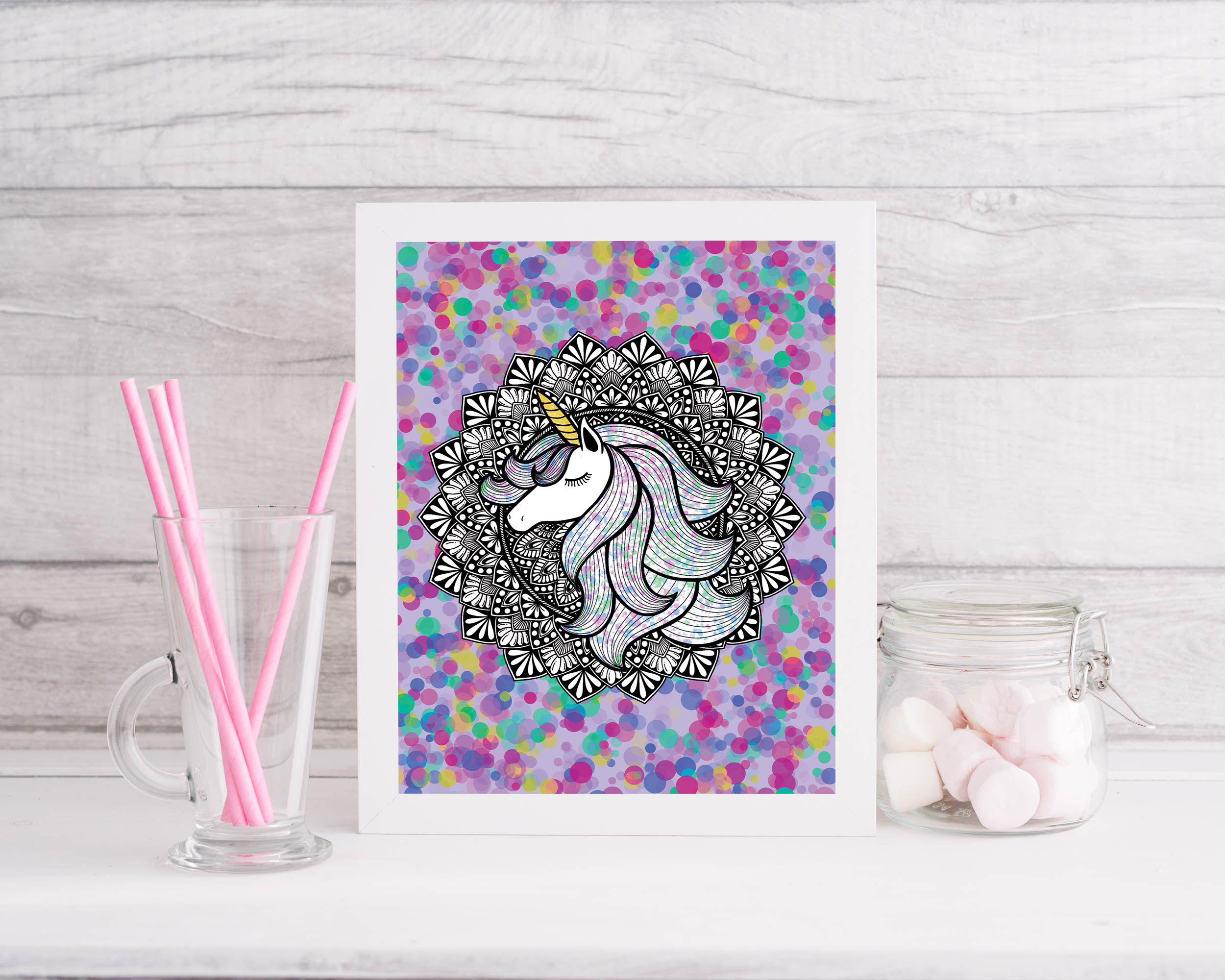
High contrast and saturated colour energise — which makes them right for certain spaces and wrong for others. A deeply colourful mandala in a home office might sustain focus and creativity. That same piece in a bedroom could work against the wind-down cues the brain needs at night. This is not a rule; it is a consideration. Know what each room is for, and let that guide your colour choices.
Organic Forms and the Nervous System
Beyond colour, the shapes within a piece of art communicate directly with the body. Sharp angles, aggressive geometries, and jagged lines trigger a subtle alerting response — a legacy of the nervous system's evolution in environments where such shapes often signalled danger. Curves, by contrast, read as safe. They are the language of living things: the arc of a petal, the spiral of a shell, the round of a hill on the horizon.
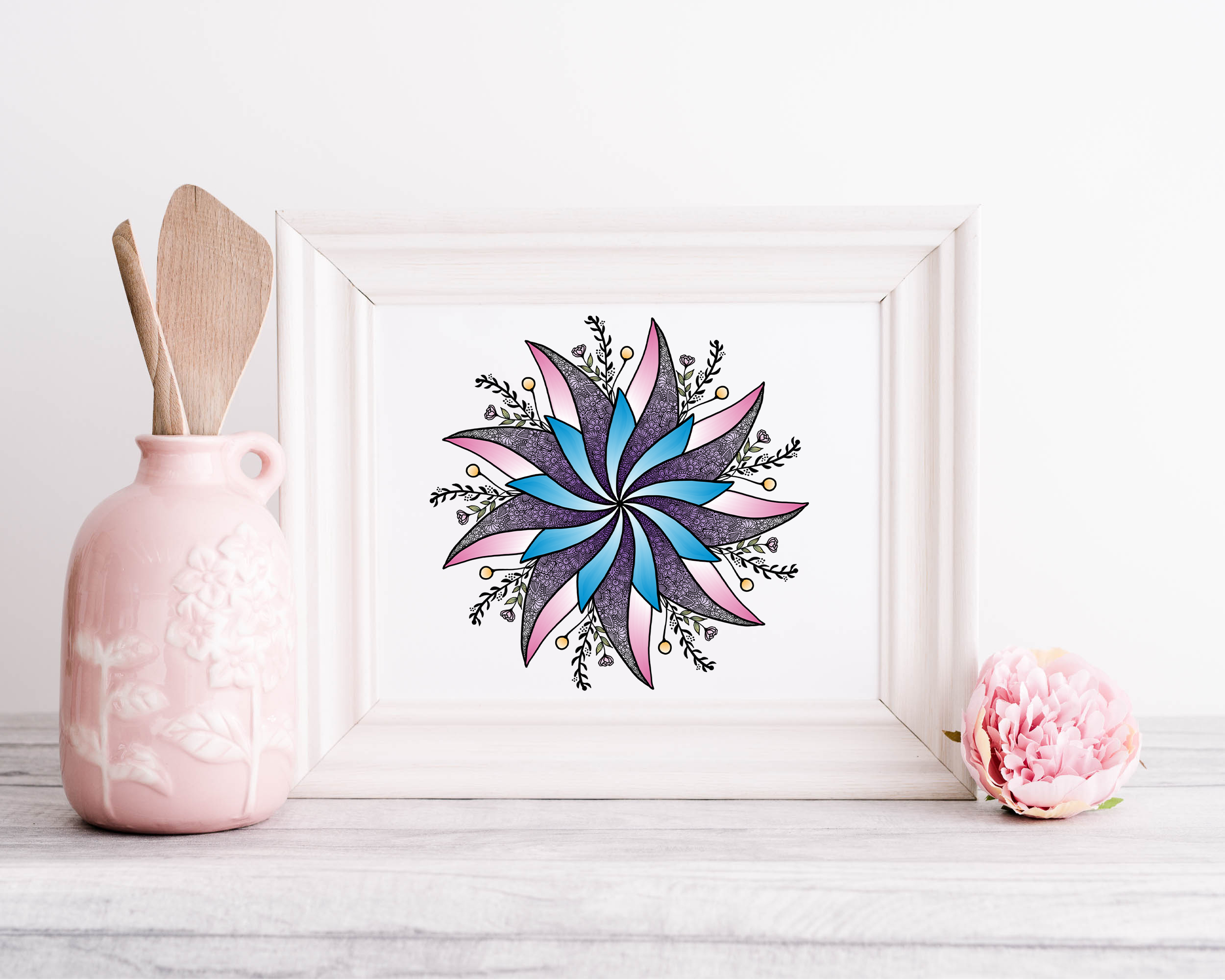
This is one reason we are drawn to botanical and mandala-based work. Both forms are built on curves and radial symmetry — shapes the eye can follow without effort, without urgency. The botanical elements in our organic flower mandalas, in particular, activate something that researchers call "soft fascination": a gentle, effortless engagement that allows the mind to wander and recover at the same time.
Soft fascination is the cognitive state associated with daydreaming, with watching clouds, with half-watching a candle flame. It is deeply restorative. Art that invites this state — rather than demanding focused attention — is art that actively contributes to mental recovery. We think about this when we design. We want our pieces to welcome a wandering eye, not to pin it in place.
Choosing Art for Each Space
Not all rooms make the same demands on us, and the art we choose should reflect that. Here is how we think about it:
The Bedroom
This is the space most closely associated with rest and vulnerability. Art here should be soft in colour temperature, low in visual complexity relative to the rest of the home, and personally meaningful without being emotionally activating. A single, medium-format mandala in muted tones — placed where it can be seen from the bed — gives the mind a gentle destination as it unwinds. Avoid high-contrast or emotionally charged imagery.
The Living Room
This is a social and transitional space, which means it can sustain more visual richness. A large statement piece — a full mandala at significant scale, or a wall mural — creates a natural focal point that anchors conversations and gives guests something to respond to. This is also the space where art can carry the most personal expression. Let it be bold.
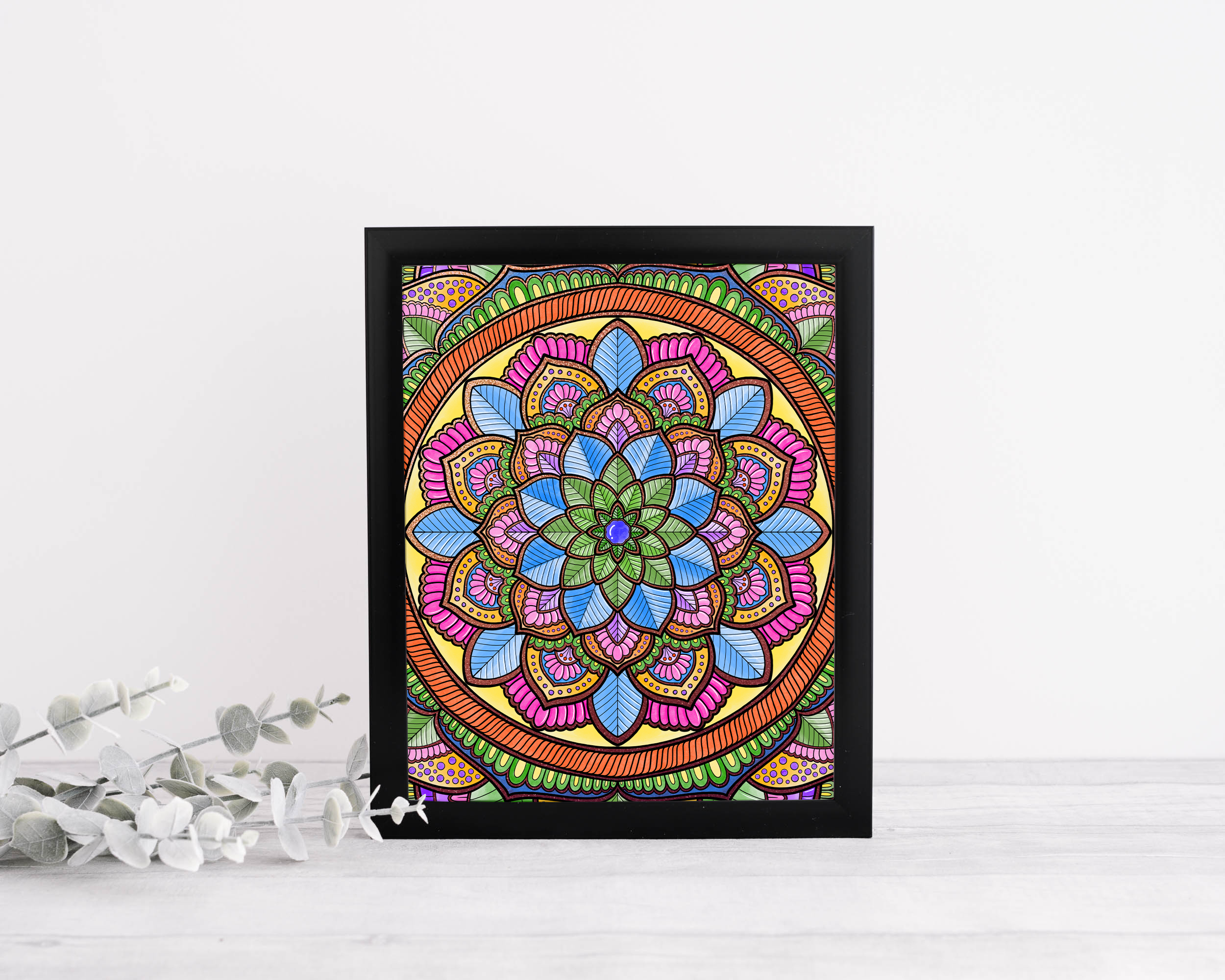
In a living space, a richly coloured mandala earns its scale — it becomes the visual heart of the room.
The Home Office or Studio
Art in a workspace should sustain focus without becoming a distraction. Geometric mandalas — those with clear, precise structure and a contained palette — work well here. The eye can return to them briefly during moments of mental pause and find a kind of visual order that reinforces rather than disrupts the working state. Avoid overly complex or narratively demanding imagery that pulls attention away.
Hallways and Transitional Spaces
These are underused opportunities. A hallway is a decompression zone — a space you pass through when arriving home, when moving between parts of your day. Art here can set a tone for the space beyond. We often recommend medium-format pieces with high visual harmony: something that takes about two seconds to appreciate fully, then releases you to continue on your way feeling slightly more settled.
Scale, Breathing Room, and the Art of Restraint
One of the most common mistakes in hanging art is underscaling. A small print on a large wall does not create calm — it creates visual uncertainty, a sense that something is missing. The eye searches for resolution and does not find it. Conversely, a single confident piece — hung at the right height, with generous space around it — creates a stillness that ripples outward into the whole room.
The rule we live by: when in doubt, go larger and choose less. One A2 print with thirty centimetres of breathing room on each side will do more for a room's atmosphere than five A4 prints clustered together. The space around art is part of the art. It is what allows the eye to approach the piece, engage with it, and withdraw — a rhythm that, repeated throughout the day, becomes genuinely restorative.
A Practice, Not a Purchase
We want to close with something that goes slightly against our commercial interest to say: the most important thing about art and mental wellbeing is not which piece you buy. It is the practice of paying attention to how your environment makes you feel, and making small, deliberate changes in response to that.
Start by noticing. Sit in each room of your home for five minutes and observe what your eyes do, what the space asks of you, what it gives back. You will know quickly which walls feel like noise and which feel like rest. That knowing is the beginning of designing calm — and the art comes after, in service of what you have already discovered.